So… I’ll start here:
1. General Symbolism of the West in Occultism:
In many occult traditions, directions are imbued with symbolic meaning. The west often represents the end of the day, death, transition, or the realm of the unknown. It can symbolize spiritual darkness, the setting sun (which can be associated with the end of a cycle), or even the spirit world. In some occult beliefs, the west is linked to the underworld or the afterlife.
A witch facing west (image down below) could be symbolically associated with death, crossing over, or invoking spirits from the other side. In occult practices, such gestures or positions can be part of rituals intended to open channels to supernatural realms, depending on the specific belief system.
2. Artistic Representation:
If the sculpture you’re referring to is an artistic piece in Central Park, it’s possible that the position or orientation of the figure is symbolic within the context of the artist’s intent. Some modern sculptures incorporate occult or mystical symbols deliberately, exploring themes such as life, death, and the unknown. Artists may use such symbolism to provoke thought or to comment on the transience of life or the nature of existence.
3. Occult or Witchcraft Symbolism:
Witches and practitioners of occult traditions sometimes use specific gestures or positions as part of their rituals. A witch facing west could signify a connection to the elements of water or the spiritual realm, as the west is associated with the setting sun and the mysteries of the afterlife in certain occult systems.
In some witchcraft traditions, the west is considered a point of introspection, reflection, and communication with the unseen. If the sculpture is of a witch facing west, it could be symbolically invoking themes of divination, spiritual rituals, or a connection to the spiritual realm.
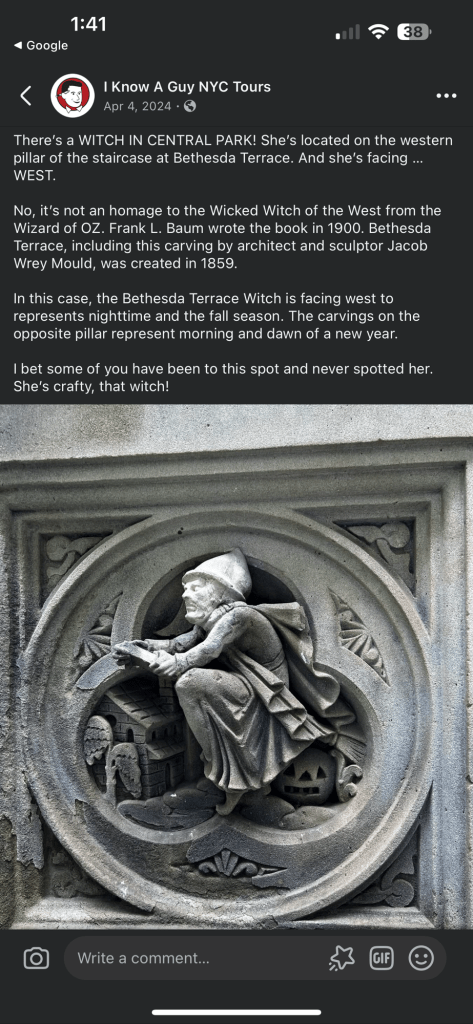
4. Interpretations of Art in Public Spaces:
Public art in parks and cities often includes a variety of symbolic representations-sometimes subtle and sometimes overt. What may seem like an overt occult symbol to one person might be purely artistic or thematic in another context. The witch figure could be an allegorical or archetypal representation rather than a specific occult icon.
Artists may use symbols that can be open to interpretation, allowing viewers to engage with the work through their own perspectives. If there is a witch facing west, the symbolism may invite thoughts about death, transition, or mysticism, but it may not necessarily promote any particular occult agenda. Who knows, right? One could only “guess”.
5. The Witch as a Representation of the Feminine Mystical Tradition:
The figure of a witch might also be a representation of the feminine mystical or spiritual traditions throughout history. Many cultures associate women with earthy wisdom or spiritual insight, and this could be reflected in a figure such as a witch. Facing west could simply represent the mysteries of the unknown, inviting people to reflect on the limits of knowledge or the mysteries of life and death.
The witch could also be a symbolic figure pointing to the wisdom of the natural world, intuition, and the occult sciences. These elements often get a bad reputation in certain religious contexts but were also historically viewed as spiritual knowledge that connects one to divine mysteries.
6. The Statue of John Lennon (Strawberry Fields Memorial):
The Strawberry Fields Memorial near Central Park West is dedicated to John Lennon, who was famously involved in “mysticism and peace” movements. The symbol of the peace sign, which is widely associated with countercultural movements, also has roots in occult symbolism.
The peace symbol itself is said to be derived from the Nazi “death” symbol (the broken cross)(WOW) and some occultists have drawn connections between peace and chaos, seeing the symbol as a subtle expression of antagonism against divine order. Lennon’s beliefs in peace, transcendence, and the exploration of consciousness through psychedelic experiences and Eastern philosophies may also evoke occult themes of seeking higher states of awareness and connecting with otherworldly forces.
7. Baphomet-Like Figures:
Some of the statues in Central Park have figures that can be likened to Baphomet, the deity often associated with occultism, particularly in Satanism and Gnosticism. Baphomet is typically depicted as a winged human-animal hybrid with elements of both male and female traits, symbolizing dualities, balance, and spiritual enlightenment through the reconciliation of opposites.
Certain mystical statues in Central Park-such as Faun-like creatures, which embody nature and the wild-may have associations with Baphomet, or at least representations of similar mystical archetypes. These could symbolize the dark side of nature, primal forces, or the unbridled wildness of the spiritual world.
8. Masonic and Illuminati Influence:
Central Park’s design itself is said to have been influenced by Freemasonic and Illuminati symbolism, even if indirectly. The park’s design by Frederick Law Olmsted and Calvert Vaux has been scrutinized for possible geometrical alignments, references to occult numerology, and the spiritual use of nature. For example, the layout of certain terraces, fountains, and gateways may symbolically represent initiation, the journey of the soul, or hidden spiritual truths, which are common motifs in Masonic teachings. Masonic symbolism itself is often associated with occult practices-with themes like light, enlightenment, and the search for hidden truth.
Some claim that these symbols, which appear in various forms in public art and architecture, represent an occult agenda hidden in plain sight.
9. Occult Interpretation of Trees and Nature:
Nature is a powerful symbol in occultism, and many of the trees and gardens in Central Park could be interpreted through the lens of nature worship or pagan beliefs. Trees and plants are often seen as symbols of life, growth, and spiritual connection to the earth, but they can also be associated with the underworld or dark, hidden aspects of existence in certain occult traditions.
The Tree of Life in Kabbalah and similar symbols of nature are important in esoteric teachings, but they also hint at darker aspects of the spiritual journey, such as knowledge gained at the expense of innocence or the cost of spiritual growth through struggle.
10. The Hidden Meaning of Statues and Monuments:
Central Park is home to various monuments commemorating figures and events from both American history and global culture, including those with ties to mysticism or esoteric movements. Some statues or memorials may incorporate hidden meanings or symbology related to occult traditions.
For example, the Lion statues (often depicted in mystical traditions) could symbolize both protection and destruction, representing a duality common in occult beliefs. Statues of founders or leaders might embody spiritual authority that some believe (def me) holds a darker influence.
11. Energy Ley Lines and Geomancy:
The layout of Central Park has been discussed in terms of ley lines, which are energy pathways that some believe run through the earth. These lines are thought to be channels of mystical or spiritual energy that affect the consciousness of those who walk along them. The park’s design might have been intentionally placed to align with geomantic forces, drawing on earth energies that connect with spiritual or occult practices.
Ley lines and geomancy are linked to esoteric knowledge, and some theorize that certain locations in the park may have been chosen for their hidden spiritual significance- either to harness these energies or to influence those who pass through them.
Now…. On to the designer.
Frederick Law Olmsted, the renowned landscape architect who co-designed Central Park with Calvert Vaux, is widely celebrated for his contributions to landscape design, urban planning, and his role in shaping many parks across the United States. His work on Central Park is often praised for its vision of creating natural, peaceful spaces within the urban environment. However, when it comes to darker or more occult interpretations of his work, there are several speculative ideas and conspiracy theories that tie his personal beliefs, connections, and designs to the occult and mysticism.
Here’s a breakdown of his background and the potential occult connections to his life and work:
Frederick Law Olmsted: A Brief Overview
• Born: April 26, 1822, in Hartford, Connecticut.
• Died: August 28, 1903, in Brookline, Massachusetts.
• Olmsted began his career in landscape architecture after working in various fields, including farming, writing, and journalism. His education was not formally in architecture, but his work was greatly influenced by his travels in England, where he studied landscape gardens and public park designs.
• He is credited with designing Central Park in New York City, as well as other notable parks like Prospect Park in Brooklyn, and the Emerald Necklace in Boston. He was also involved in designing the grounds of the World’s Columbian Exposition in Chicago in 1893.
Olmsted’s Personal Beliefs and Philosophy:
• Humanism and Nature: Olmsted believed in the power of nature to heal and elevate the human spirit. His designs were heavily influenced by Transcendentalism, a philosophical movement that sought to explore the connection between humans and nature, often associating nature with divine forces. Ralph Waldo Emerson and Henry David Thoreau were key figures in this movement, and their ideas likely influenced Olmsted’s approach to landscape architecture.
• His landscapes were often designed to foster spiritual reflection, serenity, and a connection to higher truths that transcended the mundane world. These philosophies could be seen as aligned with mystical or esoteric beliefs, in the sense that they sought to connect the human experience with the divine through the natural world.
Occult and Esoteric Connections:
While Olmsted’s works and philosophies do not explicitly promote occultism, there are certain aspects of his designs and beliefs that can be interpreted through an occult or mystical lens. Here’s how some of his work and the theories surrounding him have been connected to the dark side of symbolism:
1. Use of Sacred Geometry:
• Sacred geometry is an occult concept that involves the use of geometric shapes and patterns that are believed to have divine or mystical significance. Some believe that Olmsted, whether intentionally or unintentionally, incorporated sacred geometry into his park designs, particularly in the way paths, landscapes, and elements were laid out.
• For example, Central Park’s design is said to incorporate geometrical alignments that some interpret as symbolic of hidden spiritual truths or occult knowledge. The use of circles, angles, and intersecting lines could be seen as representative of occult cosmology or as symbolic representations of the interconnectedness of life and death, light and dark, or the divine and earthly realms.
2. Connection to Freemasonry:
• There has been speculation that Olmsted, like many prominent men of his time, may have had connections to Freemasonry. Freemasons are often associated with occult practices, mysticism, and secret knowledge. The symbolism of masonry—such as arches, columns, and the use of specific numbers—has been found in many architectural designs, and some believe that certain elements in Central Park may have been influenced by these ideas.
• The idea that Olmsted was influenced by Freemasonic or esoteric traditions is speculative, but there are patterns in his designs that some see as deliberately aligning with Masonic rituals, such as the use of paths that represent the journey of the soul, landscapes designed for introspection, and hidden meanings embedded in the environment.
3. Occult and Mystical Symbolism in Central Park’s Layout:
• Central Park’s design is sometimes scrutinized for its possible occult connections, especially when considered through the lens of geomancy and ley lines—the idea that the earth contains spiritual energy channels that can influence human behavior and consciousness. Some theorists claim that certain locations and monuments in the park align with energy ley lines and have spiritual significance.
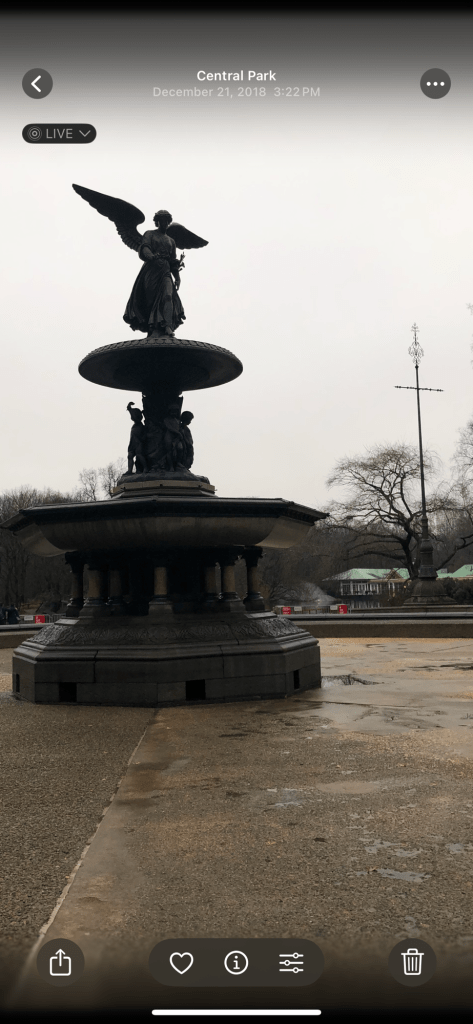
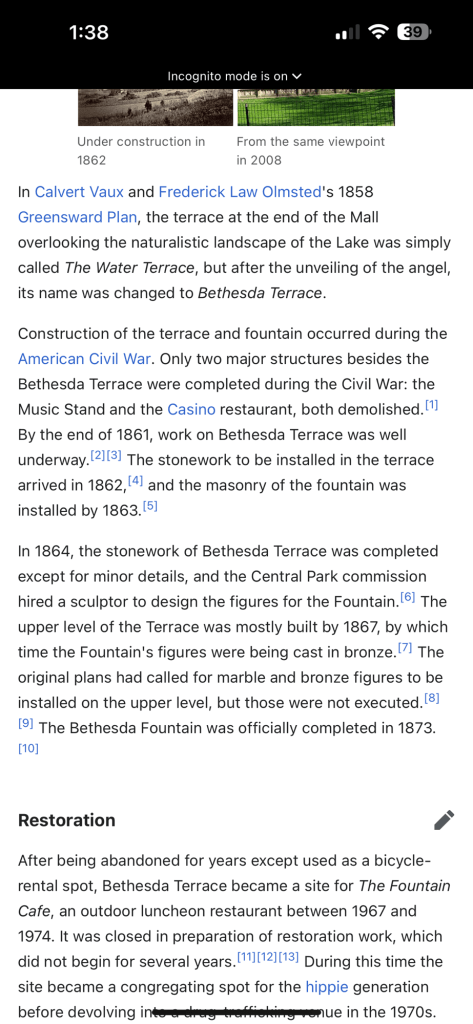
• The West Side of the Park (with the Bethesda Terrace and Angel of the Waters) and the Bow Bridge have been suggested as focal points where spiritual energy may be directed or concentrated. This idea ties into theories about parks and gardens being designed as spiritual spaces that channel energy, akin to sacred temples or occult centers.
4. The Role of Nature and the Occult:
• Many occult traditions view nature as a source of divine energy and spiritual transformation. Olmsted’s work, which was designed to create harmony between humans and nature, could be seen as an attempt to connect people to the hidden forces of the natural world—forces that are sometimes regarded as occult in nature.
• Natural elements, such as trees, rivers, and mountains, are often associated with ancient rituals, sacred knowledge, and spiritual gateways in occult traditions. Olmsted’s emphasis on designing spaces that integrated these elements could be interpreted as an effort to tap into the spiritual power of the earth.
5. The Influence of Mystical Figures:
• There are also theories that suggest Olmsted was influenced by mystical figures and philosophers who had connections to occultism. The idea of creating landscapes that invited introspection, solitude, and a deeper connection to the sublime aligns with the mystical experiences that are often sought in occult practices.
Opinion Theories Around Olmsted and Central Park:
• Some individuals claim that Central Park, as well as some of Olmsted’s other works, were designed to incorporate hidden occult messages or that they were part of a larger esoteric agenda. These theories sometimes suggest that Olmsted was part of a secretive group of mystics or occultists who used public spaces as ways to communicate hidden truths to those “in the know.”
• Critics who subscribe to these theories often cite the symbolism in park structures, geometric alignments, and even the choice of certain locations for monuments as evidence of a hidden spiritual agenda tied to occult practices.
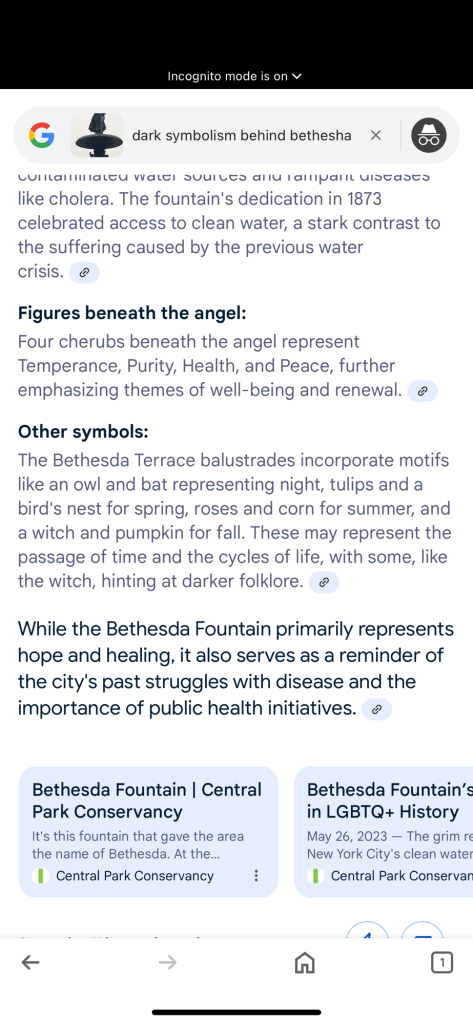
The Angel of the Waters and Occult Significance:
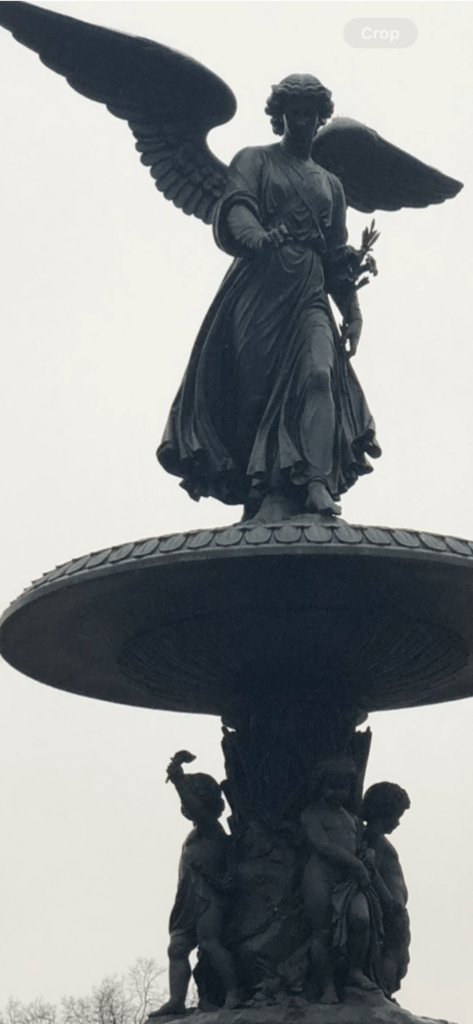
• Bethesda Terrace and the Angel of the Waters are two of the most famous and heavily scrutinized aspects of Central Park’s design. The angel holding a bowl of water could symbolize divine purification or spiritual cleansing. Water is often seen as a spiritual medium in occult traditions, representing the flow of hidden knowledge, the subconscious, and the cleansing of sin.
• The location of the Angel of the Waters at the intersection of major paths and water features might be seen as symbolizing a gateway to higher or hidden spiritual realms, suggesting the intersection of the physical world and the spiritual world.
Conclusion:
Frederick Law Olmsted was a mason, there are many speculative interpretations of his work that suggest ties to mystical, esoteric, or occult ideas. Whether through the use of sacred geometry, connections to Freemasonry, or the placement of certain symbols in Central Park, some believe Olmsted’s landscapes may carry deeper, hidden meanings that align with occult and mystical philosophies. However, much of this remains speculative and part of the broader cultural narrative of finding secret meanings in public spaces.
1. The Angel’s Outstretched Hand:
A Call to Destruction: The angel’s outstretched hand, typically seen as offering healing and protection, could be interpreted in a sinister light as a beckoning gesture toward doom or ruin. In certain interpretations, an angel’s hand could be seen as a symbol of judgment or even a warning, calling individuals to their fate.
The “Angel of Death”: While the statue is associated with healing, some might cryptically link the figure to the Angel of Death, who appears in various mythologies and religions as the bringer of the end. The angel’s position over water (a symbol of life and death) might take on darker connotations when viewed as the guide to an inevitable end.
2. The Healing Waters as a Trap:
False Hope: The healing waters referenced in the biblical story could be seen as a metaphor for false salvation. The idea that those who enter the water will be healed may take on a more sinister tone if interpreted as a trap-where those who seek help are ultimately led astray or harmed by trusting in illusions of restoration or safety.
Deception: In a more crutic sense. the water could symbolize the passage of time or the flow of life, where people are drawn into the illusion of purity or healing, but in reality, they are moving closer to their doom or manipulation.
3. The Lily in the Angel’s Hand:
Symbol of Death: While lilies are often seen as symbols of purity and renewal, in some traditions, they are also associated with death and mourning.
In the context of a sinister interpretation, the lily could symbolize the fragility of life or a warning about the transient nature of human existence.
The Perilous Beauty: The beauty of the lily could be seen as a symbol of false allure, drawing people toward something that promises life but instead delivers destruction or despair.
4. The Fountain and the Pool of Bethesda: The Pool’s Healing Waters as a Trap: The biblical story behind the statue is of a pool that healed the sick, but there was a certain elusiveness about it— only those who were able to enter the waters first could be healed, implying exclusivity and desperation. This could be interpreted as a commentary on a world where the chances of salvation or relief are limited and controlled, potentially leaving most in a hopeless state.
A Reflection of Corruption: The fountain and water, which are supposed to symbolize purity and divine grace, could also be seen as reflections of corruption within society, with the angel acting as a deceiver rather than a protector.
5. Water as a Symbol of Chaos:
• Water is often a dual symbol in mythologies: it represents life, but it also symbolizes chaos, danger, and the unknown. The flowing water beneath the angel’s feet could be interpreted as representing a force that can be both nurturing and destructive. In a sinister sense, the angel might not be offering comfort, but rather overseeing a dangerous, uncontrolled force that leads to destruction.
6. Spiritual Stagnation and the Need for True Healing:
The paralyzed man had been waiting at the pool for 38 years, a number that could be seen as symbolizing a long period of spiritual barrenness or waiting for a breakthrough. In a spiritual sense, this stagnation can represent people who are waiting for something to happen-whether it’s healing, salvation, or transformation-through their own means, when the real answer is already in Christ. The pool of Bethesda could thus symbolize empty rituals or false hopes in spirituality, offering no real solution.
Conclusion: A more cryptic or sinister reading of the Angel of the Waters statue might emphasize themes of deception, false hope, and inevitable destruction. The angel, usually a symbol of protection, could instead be seen as a dark force guiding people toward a tragic end, with the waters and the lily representing fleeting beauty and the fragility of life. Instead of healing, it might be a symbol of an inescapable fate, where salvation is elusive and those who seek it may be led astray.
Exodus 20:4-5 (NASB):
“You shall not make for yourself an idol, or any likeness of what is in heaven above or on the earth below or in the waters under the earth. You shall not worship them or serve them; for 1, the Lord your God, am a jealous God, visiting the iniquity of the fathers on the children, on the third and the fourth generations of those who hate Me, but showing lovingkindness to thousands, to those who love Me and keep My commandments.”
Deuteronomy 5:8-9 (NASB):
“You shall not make for yourselves a graven image, or any likeness of anything that is in the heaven above or on the earth beneath or in the waters beneath the earth. You shall not worship them or serve them; for 1, the Lord your God, am a jealous God, visiting the iniquity of the fathers on the children to the third and the fourth generations of those who hate Me, but showing lovingkindness to thousands, to those who love Me and keep My commandments.”
Now, I will get to my main point and reference this all back to why it is not OK. an actual inversion of what Jesus taught us after his birth, life, death, and resurrection.
John 5:1-4:
“After these things there was a feast of the Jews, and Jesus went up to Jerusalem. Now there is in Jerusalem by the sheep gate a pool, which is called in Hebrew Bethesda, having five porticoes. In these lay a multitude of those who were sick, blind, lame, and withered. Waiting for the moving of the waters; for an angel of the Lord went down at certain seasons into the pool and stirred up the water; whoever then first, after the stirring up of the water, stepped in was made well from whatever disease with which he was afflicted.”
We are told to have faith in Jesus alone – He brings immediate healing and, relying on idols or statues would be spiritual idolatry is supported by various passages throughout the Bible. Here are a few key verses that emphasize the power of faith in Christ Jesus the Messiah for healing and warn against idolatry:
1. Faith in Jesus for Healing:
Matthew 9:28-30 (NASB): “When He entered the house, the blind men came up to Him, and Jesus said to them, ‘Do you believe that I am able to do this?’ They said to Him, ‘Yes, Lord.’ Then He touched their eyes, saying, ‘It shall be done for you according to your faith.’ And their eyes were opened.” Faith in Jesus is directly connected to the ability to receive healing. Jesus responded to their faith, and their healing came immediately.
Mark 5:34 (NASB): “And He said to her, ‘Daughter, your faith has made you well; go in peace and be healed of your affliction.’” The woman who touched Jesus’ garment was healed because of her faith. Jesus didn’t say that her healing came through any object or ritual but through her faith in Him.
Matthew 17:20 (NASB): “And He said to them, ‘Because of the littleness of your faith; for truly I say to you, if you have faith the size of a mustard seed, you will say to this mountain, ‘Move from here to there,’ and it will move; and nothing will be impossible to you.’” Jesus teaches that even a small amount of faith in Him – such as the size of a mustard seed – can bring about great change, showing that healing is a result of faith in His power alone.
2. Relying on Jesus, Not Idols:
Exodus 20:4-5 (NASB) — The Second Commandment: “You shall not make for yourself an idol, or any likeness of what is in heaven above or on the earth beneath or in the waters under the earth. You shall not worship them or serve them; for I, the Lord your God, am a jealous God…” This commandment prohibits the making and worshiping of idols or images, which would include using statues as objects of spiritual devotion or healing. God describes Himself as jealous of any idol worship, signaling that reliance on anything but Him is idolatry. Using a fountain, to throw pennies/change in, pray at/to, etc…. Is idolatry.
Isaiah 42:8 (NASB): “I am the Lord, that is My name; I will not give My glory to another, nor My praise to graven images.” God emphasizes that His glory and praise belong to Him alone, not to statues or idols. Seeking healing or help from idols is a form of spiritual idolatry because it takes the focus off of God and places it on a created object.
Romans 1:25 (NASB): “For they exchanged the truth of God for a lie, and worshiped and served the creature rather than the Creator, who is blessed forever. Amen.” This verse speaks about the danger of idolatry, where people turn to created things, including statues or objects, instead of worshiping and trusting in God alone. This is a form of spiritual idolatry in the sense that one’s heart and devotion are being given to something other than God.
1 John 5:21 (NASB): “Little children, guard yourselves from idols.” This is a direct warning to believers to stay away from idols, which includes not relying on statues or objects for healing, protection, or blessing.
3. Jesus Alone as the Source of Healing:
Acts 4:12 (NASB): “And there is salvation in no one else; for there is no other name under heaven that has been given among men by which we must be saved.” Jesus alone is the source of salvation and healing, and this verse emphasizes that no one else—no object, statue, or person—can provide the salvation or healing that Jesus offers.
John 14:6 (NASB): “Jesus said to him, ‘I am the way, and the truth, and the life; no one comes to the Father but through Me.’” Jesus is the only way to God, and by placing faith in Him, believers can receive healing and deliverance, not by relying on physical objects or idols, but faith alone.
Conclusion:
The Bible consistently teaches that healing comes through faith in Jesus Christ alone, not through objects or statues. Relying on such things for healing would be considered a form of idolatry and spiritual adultery, as it places faith in something other than God. Statues or images are not to be worshipped or relied upon, and any attempt to use them as a means of obtaining healing undermines the centrality of faith in Christ for our spiritual and physical well-being.
Ending on why Bethesda statue is just… a no.
While the biblical story of Bethesda is primarily one of healing and mercy, there are layers of symbolic meaning that can be seen as darker in the sense of spiritual blindness, hopelessness, reliance on false hopes, and human pride. The pool itself, with its temporary and unreliable healing, can represent human attempts to solve spiritual issues that are ultimately ineffective compared to the immediate and complete healing that Jesus Christ offers. In this light, the story also conveys a message about the necessity of turning to Christ for true healing, rather than relying on rituals, human effort, or empty religious practices.
 Thorn & Crown Co.
Leave a comment